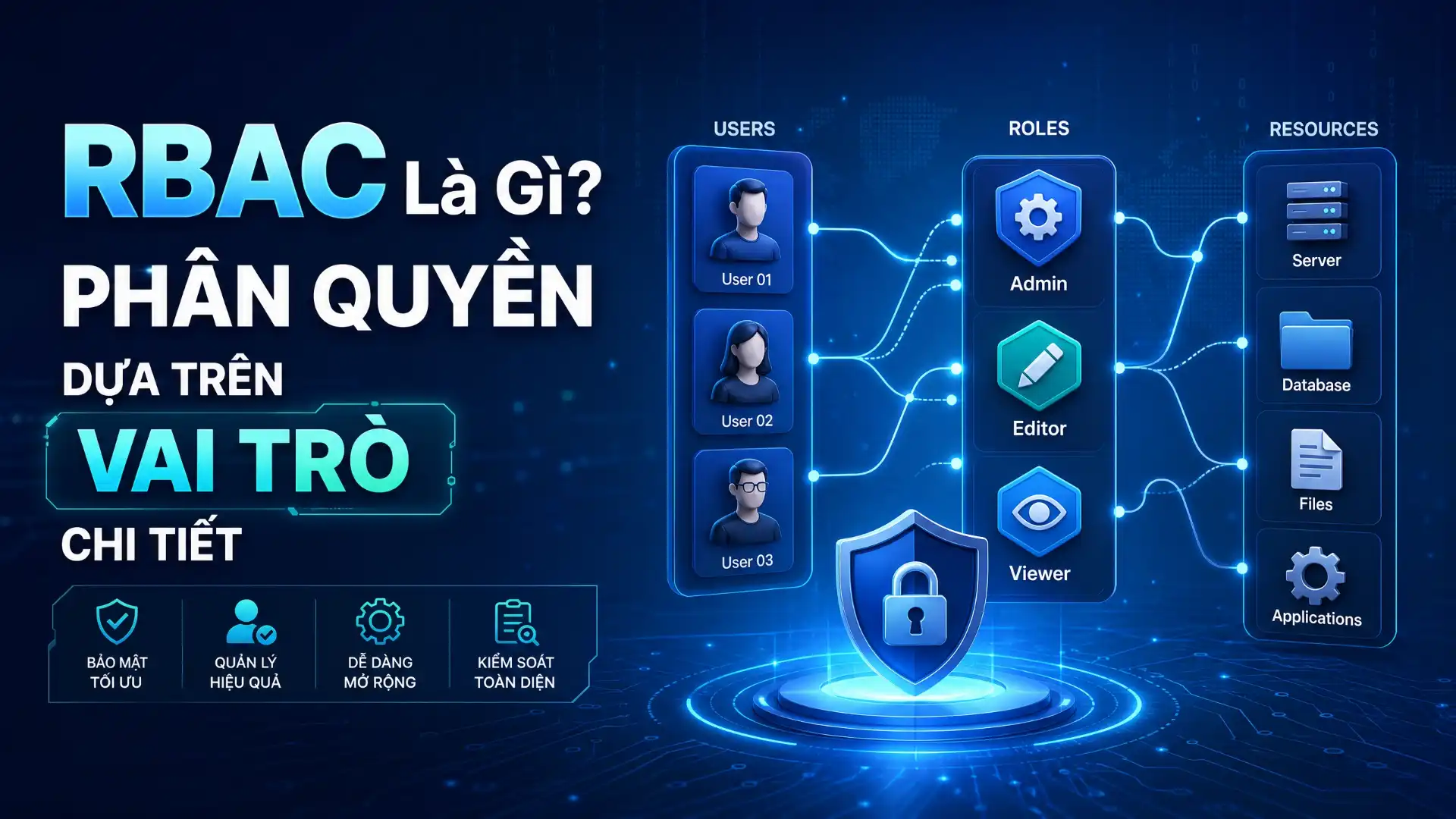
RBAC Là Gì? Phân Quyền Dựa Trên Vai Trò Chi Tiết là gì
RBAC Là Gì? Phân Quyền Dựa Trên Vai Trò Chi Tiết là gì — RBAC (Role-Based Access Control) là phương pháp quản lý quyền truy cập hệ thống dựa trên vai trò của người dùng trong tổ chức. Thay vì gán quyền riêng lẻ cho từng user, RBAC gán quyền cho các vai trò (roles), sau đó gán vai trò cho người dùng. Cách tiếp cận này đơn giản hóa việc quản lý quyền truy cập, đặc biệt trong các hệ thống lớn với hàng trăm hoặc hàng nghìn người dùng.
RBAC được phát triển từ những năm 1990s và trở thành standard trong enterprise access control. Khi tìm hiểu RBAC Là Gì? Phân Quyền Dựa Trên Vai Trò Chi Tiết là gì, nIST (National Institute of Standards and Technology) đã định nghĩa RBAC như một trong những recommended models cho enterprise security.
Tại Sao RBAC Quan Trọng?
RBAC là gì
RBAC giúp implement principle of least privilege – người dùng chỉ có quyền cần thiết để hoàn thành công việc. Khi tìm hiểu RBAC Là Gì? Phân Quyền Dựa Trên Vai Trò Chi Tiết là gì, developer không cần quyền admin production database. Accountant không cần quyền access source code. Điều này giảm thiểu risk nếu account bị compromise.
2. Đơn Giản Hóa Quản Lý Quyền
Thay vì quản lý hàng nghìn individual permissions cho từng user, admin chỉ cần quản lý dozens of roles. Khi tìm hiểu RBAC Là Gì? Phân Quyền Dựa Trên Vai Trò Chi Tiết là gì, khi employee join, assign appropriate role(s). Khi leave, remove role(s). Permission changes affect all users trong role đó simultaneously.
3. Compliance và Audit
RBAC giúp meet compliance requirements như SOX, HIPAA, GDPR.Khi tìm hiểu RBAC Là Gì? Phân Quyền Dựa Trên Vai Trò Chi Tiết là gì, dễ dàng audit who has access to what, generate reports cho auditors.Nhiều regulations yêu cầu demonstrable access controls và audit trails.
4. Separation of Duties (SoD)
RBAC hỗ trợ SoD bằng cách ensure no single user có quyền complete một critical transaction.Khi tìm hiểu RBAC Là Gì? Phân Quyền Dựa Trên Vai Trò Chi Tiết là gì, ví dụ: person who creates purchase orders không thể approve payments.This prevents fraud và errors.
Các Thành Phần Của RBAC
1. Users (Người Dùng)
Users là individuals trong hệ thống – employees, contractors, partners.Khi tìm hiểu RBAC Là Gì? Phân Quyền Dựa Trên Vai Trò Chi Tiết là gì, mỗi user được identify bằng unique identifier (username, ID).Users không có permissions trực tiếp – they chỉ được gán roles.
2. Roles (Vai Trò)
Roles represent job functions hoặc responsibilities trong organization.Khi tìm hiểu RBAC là gì, examples: Admin, Developer, Manager, Accountant, Customer Support.Roles được named meaningfully và có clear descriptions.
3. Permissions (Quyền)
Permissions define what actions có thể thực hiện trên which resources.Khi tìm hiểu RBAC là gì, examples: read, write, delete, execute, admin.Permissions gồm action (verb) và object (noun): “create users”, “delete orders”, “view reports”.
4. Resources (Đối Tượng)
Resources là những thứ cần bảo vệ – files, databases, servers, applications, APIs.Khi tìm hiểu RBAC là gì, mỗi resource có permissions xác định ai có thể access và làm gì với nó.
5. Role Hierarchy
Roles có thể có hierarchical relationships. Senior roles inherit permissions của junior roles. Ví dụ: Manager inherits all Developer permissions, plus additional management permissions.
Sơ Đồ RBAC Cơ Bản
RBAC hoạt động theo mô hình relationship ba bên:
- User → Role: Một user có thể có một hoặc nhiều roles
- Role → Permission: Mỗi role có permissions cụ thể
- Permission → Resource: Permissions apply cho specific resources
Relationship này gọi là many-to-many: Một user có thể có nhiều roles, và một role có thể được gán cho nhiều users.
Các Loại RBAC Models
1. Flat RBAC
Basic model: Users được gán roles, roles có permissions. Simple và widely used. Phù hợp cho most small to medium organizations.
2. Hierarchical RBAC
Roles có hierarchical relationships. Senior roles inherit permissions từ subordinate roles. Ví dụ hierarchy: CEO → VP → Director → Manager → Employee.
CEO (all permissions)
  └── VP Engineering (engineering + management)
        └── Engineering Manager (developer + team lead)
              └── Senior Developer (advanced developer)
                    └── Developer (basic developer)
3. Constrained RBAC
Thêm separation of duties constraints. Users không thể có conflicting roles (ví dụ: same person không thể be both approver và requester cho same transaction).
4. Attribute-Based RBAC (ABAC)
Mở rộng RBAC với user attributes (department, location, clearance level), resource attributes (sensitivity, owner), và environmental attributes (time, location). More flexible nhưng phức tạp hơn.
RBAC Implementation Best Practices
1. Role Naming Conventions
- Sử dụng clear, descriptive names:
database_admin,finance_analyst,hr_manager - Tránh generic names như
user,admin(quá rộng) - Include department/function prefix để group related roles
2. Role Definition Process
- Bước 1: Identify all job functions trong organization
- Bước 2: Document responsibilities và required access cho each function
- Bước 3: Define roles dựa trên functions, không phải individuals
- Bước 4: Map permissions to each role
- Bước 5: Document role definitions và maintain centrally
3. Role Assignment Rules
- Users nên có minimum roles cần thiết cho job function
- Avoid role proliferation – consolidate similar roles when possible
- Review role assignments quarterly hoặc khi role changes
- Require manager approval cho role assignments
Ví Dụ RBAC Trong Enterprise
Example: E-commerce Platform
| Role | Permissions |
|---|---|
| customer | View products, add to cart, place orders, view order history, update profile |
| support_agent | customer permissions + view all orders, process refunds, view customer info |
| warehouse_staff | View orders, update order status, manage inventory, process shipments |
| marketing | support_agent permissions + manage products, manage promotions, view analytics |
| finance | View all orders, process payments, generate financial reports, manage refunds |
| developer | Access dev/staging environments, deploy to staging, view logs, manage test data |
| devops | developer permissions + deploy to production, manage infrastructure, access production logs |
| admin | All permissions across all systems |
Example: Healthcare System
| Role | Permissions |
|---|---|
| patient | View own records, update contact info, view appointments |
| nurse | View patient records, update vitals, schedule appointments, access limited medications |
| doctor | nurse permissions + full patient records, prescribe medications, create treatment plans |
| pharmacist | View prescriptions, dispense medications, access medication inventory |
| billing | View patient demographics, process billing, generate invoices, access insurance info |
| admin | All permissions + user management + system configuration |
RBAC vs ABAC vs ACL
| Feature | RBAC | ABAC | ACL |
|---|---|---|---|
| Approach | Role-based | Attribute-based | Individual user-based |
| Granularity | Medium | High | High (but complex) |
| Complexity | Medium | High | High at scale |
| Scalability | Tốt | Tốt | Poor at scale |
| Admin Effort | Low-Medium | High | Very High |
| Flexibility | Limited by role design | Very flexible | Very flexible |
| Use Case | Enterprise apps | Complex policies | File systems, network devices |
RBAC Trong Kubernetes
Kubernetes sử dụng RBAC cho authorization. Các resources chính:
- User, Group, ServiceAccount – Subjects (users trong K8s)
- Role, ClusterRole – Define permissions
- RoleBinding, ClusterRoleBinding – Attach roles to subjects
Kubernetes RBAC Example
# Role for developers - read-only access to pods and logs
apiVersion: rbac.authorization.k8s.io/v1
kind: Role
metadata:
  name: developer-readonly
rules:
- apiGroups: [""]
  resources: ["pods", "pods/log"]
  verbs: ["get", "list"]

---
# Bind role to developer group
apiVersion: rbac.authorization.k8s.io/v1
kind: RoleBinding
metadata:
  name: developer-readonly-binding
subjects:
- kind: Group
  name: developer
roleRef:
  kind: Role
  name: developer-readonly
RBAC Trong AWS
AWS sử dụng identity-based policies với RBAC concepts:
- IAM Users – Individual accounts
- IAM Groups – Group users với same responsibilities
- IAM Roles – Chứa permissions, assumed by users/services
- Policies – JSON documents define permissions
AWS IAM Policy Example
{
  "Version": "2012-10-17",
  "Statement": [{
    "Effect": "Allow",
    "Action": [
      "s3:GetObject",
      "s3:PutObject"
    ],
    "Resource": "arn:aws:s3:::my-app-bucket/*"
  }]
}
Common RBAC Mistakes và Pitfalls
1. Role Explosion
2. Privilege Creep
3. Ignoring Role Hierarchy
4. Weak Role Assignment Controls
5. Not Planning for Change
RBAC Implementation Checklist
- ✅ Identify và document all roles needed
- ✅ Map permissions to each role
- ✅ Define role hierarchy (nếu applicable)
- ✅ Create role assignment workflow với approvals
- ✅ Implement automated deprovisioning
- ✅ Set up regular access reviews
- ✅ Enable audit logging của all role assignments
- ✅ Document role definitions và maintain centrally
- ✅ Train users về role-based access
- ✅ Review và refine roles periodically
RBAC Tools và Solutions
| Tool | Type | Use Case |
|---|---|---|
| Keycloak | Open Source IAM | Identity & access management |
| Apache Syncope | Open Source IAM | Enterprise identity management |
| Okta | Cloud IAM | SSO, lifecycle management |
| Azure AD | Cloud IAM | Microsoft ecosystem |
| AWS IAM | Cloud IAM | AWS resource access |
| Open Policy Agent | Policy engine | Fine-grained authorization |
Kết Luận
RBAC là nền tảng của enterprise access control, cung cấp balance giữa security và usability. Bằng cách gán permissions cho roles và roles cho users, RBAC đơn giản hóa quản lý quyền truy cập, support compliance, và enable principle of least privilege.
Implementation thành công đòi hỏi planning cẩn thận, regular reviews, và commitment to maintain role definitions as organization evolves. Khi designed và maintained properly, RBAC provides scalable, auditable access control cho organizations of any size.
Các Câu Hỏi Thường Gặp (FAQ)
1. RBAC và Permissions khác nhau như thế nào?
2. Khi nào nên sử dụng RBAC?
3. Làm sao để handle role conflicts?
4. RBAC có phù hợp cho small businesses không?
5. Làm sao để audit RBAC implementation?
Tìm hiểu thêm về Docker La Gi Tim Hieu Container Technology Chi Tiet và Ci Cd Pipeline La Gi Continuous Integration Deployment Chi Tiet.

Bài viết mới nhất

Ủng hộ

MB Bank: 0969089335 - CHÂU QUỐC HÙNG

MB Bank: 0969089335 - CHÂU QUỐC HÙNG

Momo: 0969089335 - CHÂU QUỐC HÙNG